
Service

Malaysia Domestic Tourism Industry 2026
Malaysia’s domestic tourism industry has recorded a strong post-pandemic recovery, with domestic visitors increasing from 239.1 million in 2019 to 290.1 million in 2025, while total domestic tourism expenditure rose to USD 28.3 billion, surpassing the pre-pandemic level of USD 24.9 billion. Same-day travel remains a major component of domestic tourism, while hotel activity, homestay income and visitor numbers to national parks have also shown continued recovery. Domestic visitor numbers are projected to reach approximately 340.7 million by 2030, while domestic tourism expenditure is projected to increase to USD 31.6 billion, indicating sustained growth in Malaysia’s domestic travel market.

Malaysia Foreign Workers Industry 2026
Malaysia’s registered foreign workforce declined to 1.5 million in 2020, recovered to 2.5 million in September 2024 and moderated to approximately 2.1 million in October 2025. It is projected to increase gradually to about 2.4 million by 2030P, reflecting continued demand for foreign labour in key sectors. The report also estimates an illustrative annualised remittance amount of approximately USD8.5 billion based on the September 2024 workforce stock. Effective foreign workforce management will remain important to support economic activity while managing dependence on foreign labour and workforce sustainability.
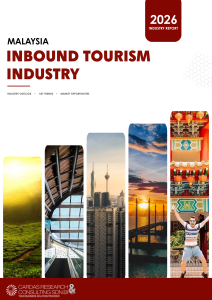
Malaysia Inbound Tourism Industry 2026
The Malaysian tourism industry has recorded a strong recovery, with foreign tourist arrivals reaching 25.0 million in 2024 and tourist receipts reaching USD22.4 billion. Foreign tourist arrivals surpassed the pre-pandemic level in 2025, reaching 26.6 million, while tourist receipts are projected at USD22.7 billion in 2025P. Looking ahead, the industry is expected to maintain gradual growth through 2030P, with foreign tourist arrivals projected to reach 27.1 million and tourist receipts USD24.5 billion, supported by regional visitor demand, shopping and food and beverage expenditure, and continued expansion in hospitality capacity.
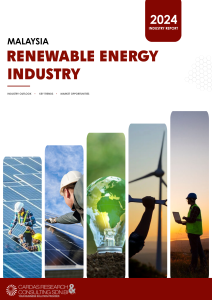
Malaysia Renewable Energy Industry 2024
ASEAN’s energy landscape, including Malaysia, is rapidly evolving due to changing consumption patterns and sustainability concerns. In 2015, Malaysia’s total energy supply rises from 52,000 ktoe to 57,000 ktoe in 2021. The total energy demand is projected to rise from 57,000 ktoe to 79,000 ktoe in the next 5 years. Overall, Malaysia’s commitment to renewable energy and efficiency improvements is crucial for sustainable future energy demands.
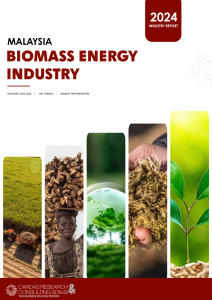
Malaysia Biomass Energy Industry 2024
Malaysia’s biomass energy sector is poised for growth, projected to increase from 175 Ktoe in 2024 to 225 Ktoe by 2030, driven by a strong agricultural base in palm oil. The country’s commitment to renewable energy is reflected in policies aimed at reducing fossil fuel reliance. Strategic investments in biomass processing and improved logistics will be essential for effective production management. As Malaysia advances its renewable energy goals, biomass will play a critical role in energy generation and sustainable agriculture, enhancing both environmental goals and energy security.
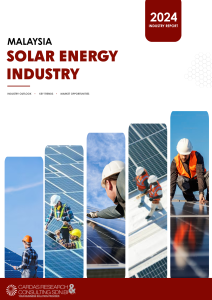
Malaysia Solar Energy Industry 2024
Malaysia’s solar energy sector has shown significant growth, rising from 32 MW in 2012 to about 1,933 MW in 2023, reflecting a strong commitment to energy security and carbon reduction. Government initiatives like the Large-Scale Solar (LSS) and Net Energy Metering (NEM) programs have spurred adoption across sectors, attracting private investment and positioning Malaysia as a regional leader in renewable energy. It is projected that the cumulative solar capacity will reach 3277 MW by 2030. With ongoing support and vast solar potential, Malaysia is well-equipped to achieve national energy goals and contribute to global sustainability efforts.
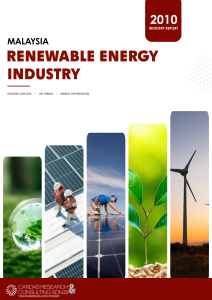
Malaysia Renewable Enegry Industry 2010
Malaysia’s energy demand is projected to rise to 98,700 ktoe by 2030, primarily from natural gas and crude oil. Despite the potential of renewable sources like biomass and solar, they currently contribute less than 1% to electricity generation. The government is promoting renewables through initiatives like the Small and Renewable Energy Power Programme and the Feed-in-Tariff mechanism. With significant investments and a goal to achieve 5.5% of electricity generation from renewables by 2015, Malaysia is positioning itself for a more sustainable energy future.

